1- Introductin :
The resolution of two-player games such as chess is based on algorithms for exploring decision trees such as Minimax and its optimization, the Alpha-Beta Pruning. These algorithms are essential in AI for strategy games. Here is an overview of how they work:
Tree structure:
• Each node represents a state of the game.
• The levels of the tree alternate between the two players:
• Maximizer: Seeks to maximize his score.
• Minimizer: Seeks to minimize the Maximizer score.
1.2- Principle :
1- We explore the tree to the leaves (or a limited horizon in complex games like chess).
2- Final states are evaluated using an evaluation function that gives a score (for example: +∞ for a win, -∞ for a loss).
3- Scores are coming up through the tree:
o Maximizer nodes take the maximum value of children.
o Minimizer nodes take the minimum value of children.
1.3- Complexity :
• Problem: The tree size grows exponentially with depth.
• For a game of chess: high number of legal positions and possible moves.
Example – Minimax -:
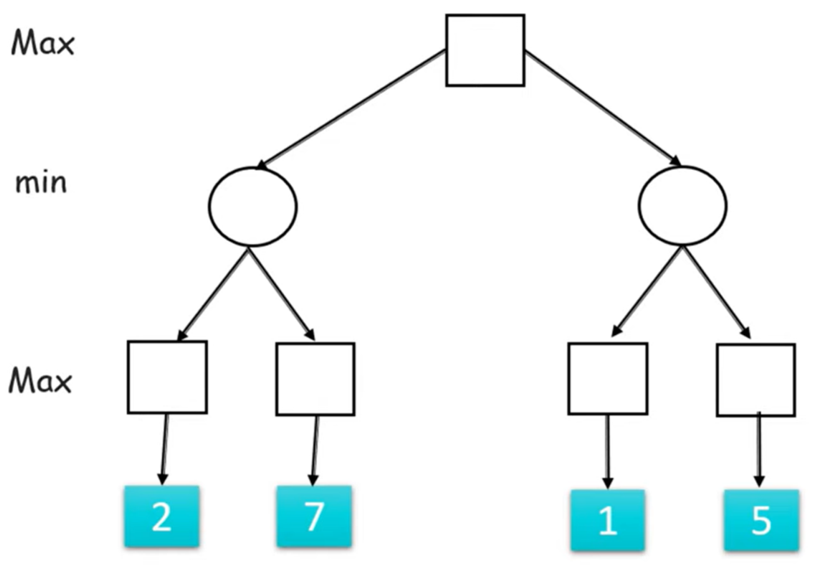
Solution:
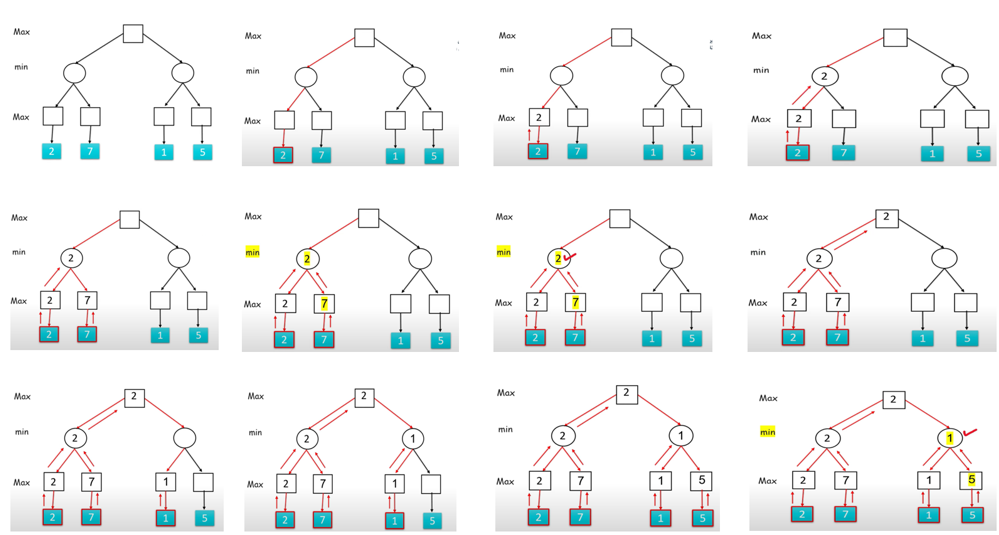
2- Alpha-Beta Pruning (Élagage Alpha-Bêta) :
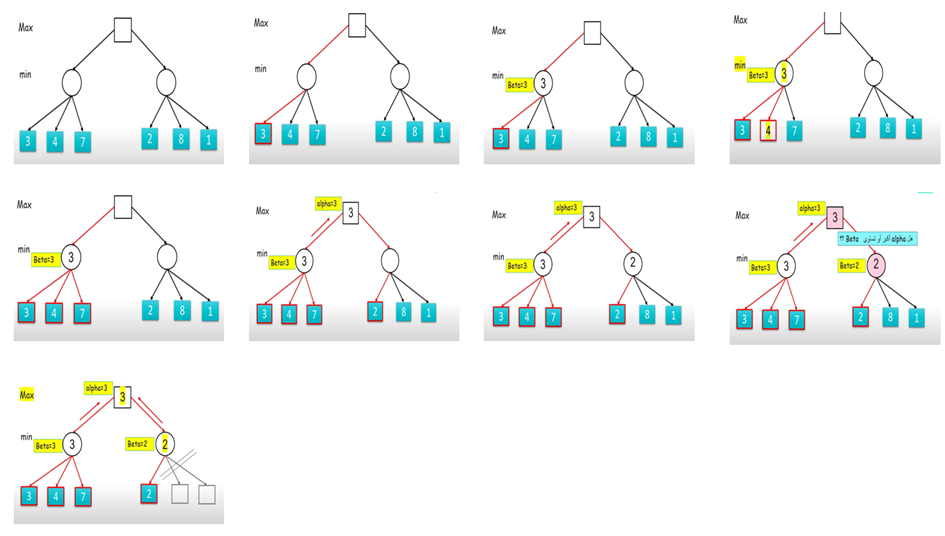
Alpha-beta improves the effectiveness of Minimax by removing branches from the tree that cannot influence the final result.
2.1- Concept:
• Alpha: The best value that the Maximizer can guarantee so far.
• Beta: The best value that the Minimizer can guarantee so far.
• When a branch cannot change the outcome for a player (because a better solution has already been found elsewhere), it is ignored.
2.2- Benefits:
• Significantly reduces the number of nodes scanned.
• Can reach a depth equivalent to the Minimax while saving time.
2.3 - Main steps:
When exploring a node:
• Updates alpha and beta.
• If beta <= alpha, the exploration of this branch is stopped (cut).
Example - Alpha-Beta Pruning :
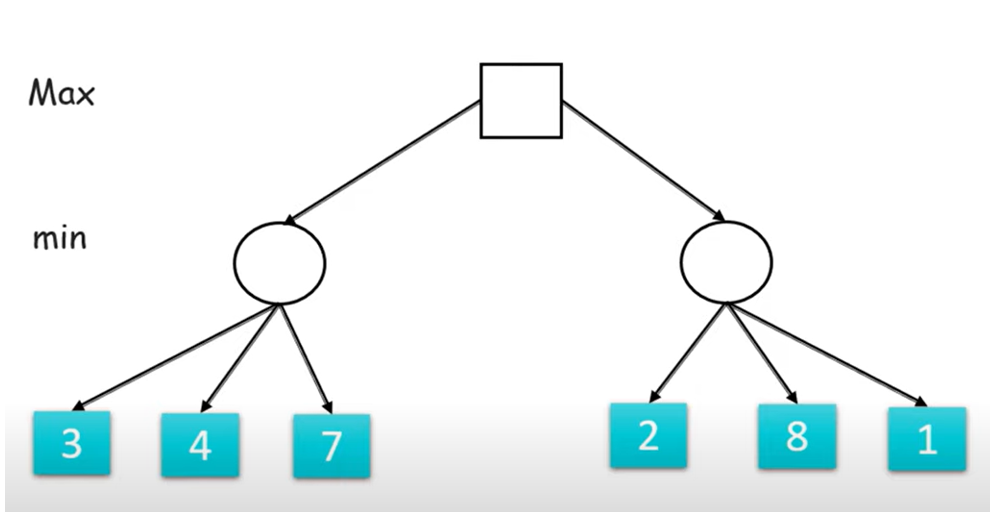
Solution :